
Casting vs Fabrication: Which Solution is Right for You?
Compare casting and fabrication to find the best solution for your project. Learn key differences, benefits, and applications in modern manufacturing.
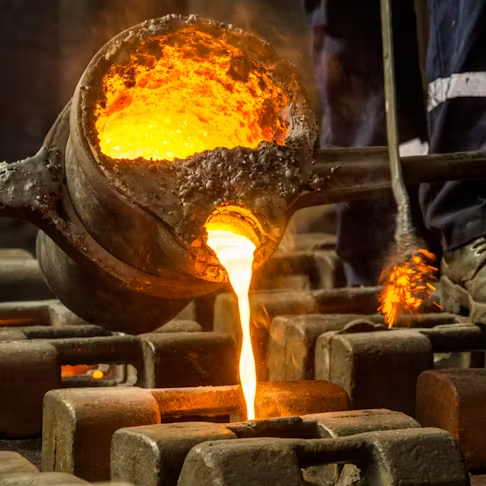
When it comes to producing metal parts or structures, two popular manufacturing methods dominate the industry: casting and fabrication . Choosing between the two can significantly impact your project’s cost, timeline, and final performance.
Understanding the differences between casting and fabrication helps you select the most efficient and cost-effective solution for your specific needs. Let’s dive into what sets these two methods apart and how to determine which one is right for your project.
What is Casting?
Casting involves pouring molten metal into a mold where it solidifies into the desired shape. This method is ideal for producing complex geometries and large volumes of identical parts.
Key Features of Casting:
-
Excellent for intricate and detailed designs
-
Suitable for mass production
-
Can use a wide range of metals (ferrous and non-ferrous)
-
Minimal material waste
Common Applications:
-
Engine blocks
-
Pump housings
-
Heavy machinery components
-
Artistic sculptures
Advantages:
-
Ability to create complex shapes in one piece
-
Cost-effective for high-volume production
-
Strong mechanical properties when properly designed
Disadvantages:
-
Longer lead times for mold creation
-
Potential for internal defects (if quality control is weak)
-
Not ideal for very small production runs
What is Fabrication?
Fabrication refers to cutting, bending, and assembling metal parts into the desired form, typically using processes like welding, machining, and forming.
Key Features of Fabrication:
-
Involves shaping metal sheets, plates, or bars
-
Highly customizable
-
Suitable for low to medium production volumes
-
Ideal for larger structures or assemblies
Common Applications:
-
Structural steel frames
-
Custom machinery
-
Industrial tanks
-
Metal enclosures
Advantages:
-
Faster production times for custom projects
-
Flexibility for design changes
-
Easier to prototype and modify
-
No need for expensive molds or dies
Disadvantages:
-
Less efficient for highly complex shapes
-
Potentially higher costs for large quantities
-
Strength can vary depending on welding and assembly quality
Casting vs Fabrication: Quick Comparison Table
| Feature | Casting | Fabrication |
|---|---|---|
| Production Volume | Best for high-volume runs | Best for low to medium volumes |
| Complexity of Design | Excellent for complex shapes | Better for simpler designs |
| Cost for Small Runs | Higher (due to mold cost) | Lower |
| Strength and Durability | Very high (depending on material) | Depends on welds and joints |
| Lead Time | Longer | Shorter |
| Flexibility | Less flexible after mold creation | Highly flexible |
How to Choose the Right Method for Your Project
Here’s a simple decision-making guide:
-
Need large volumes of identical complex parts? → Choose Casting.
-
Need flexibility and customization? → Choose Fabrication.
-
Working on a tight deadline or prototype? → Fabrication may be faster.
-
Looking for maximum durability in a single piece? → Casting often delivers better results.
Millions Power Tech: Your Partner in Manufacturing Excellence
At Millions Power Tech , we specialize in both v services to meet diverse industry needs. Whether you’re building intricate machinery parts or large structural assemblies, our expert team helps you choose the right manufacturing method for optimal results.
Not sure which process is best for your next project? Contact Millions Power Tech today for a consultation and custom solutions built to your specifications.